Hunya Munya Records · HMR010
North Cormorant Obscurity
Rykard · 2010 · Reissued on 12″ vinyl · limited to 500 copies
The track
Fifteen years underwater
Rykard released North Cormorant Obscurity in March 2010, as the eighth track on Arrive the Radio Beacon. Slow, tidal electronica from a producer working out of the Lancashire countryside.
It has since passed twenty five million streams, the widest reach of anything on the label. Pandora accepted the album in 2010 and has kept it in rotation ever since. It found its audience sideways, through algorithms rather than press, and it has never really stopped.
In December 2025 it was cut to 12″ vinyl for the first time, paired with a previously unreleased companion piece on the B-side.
- Artist
- Rykard
- Released
- 10 Mar 2010
- Album
- Arrive the Radio Beacon
- Position
- Track 8
- Duration
- 3:20
- Label
- Hunya Munya Records
Side A · the name
A platform 500km off Aberdeen
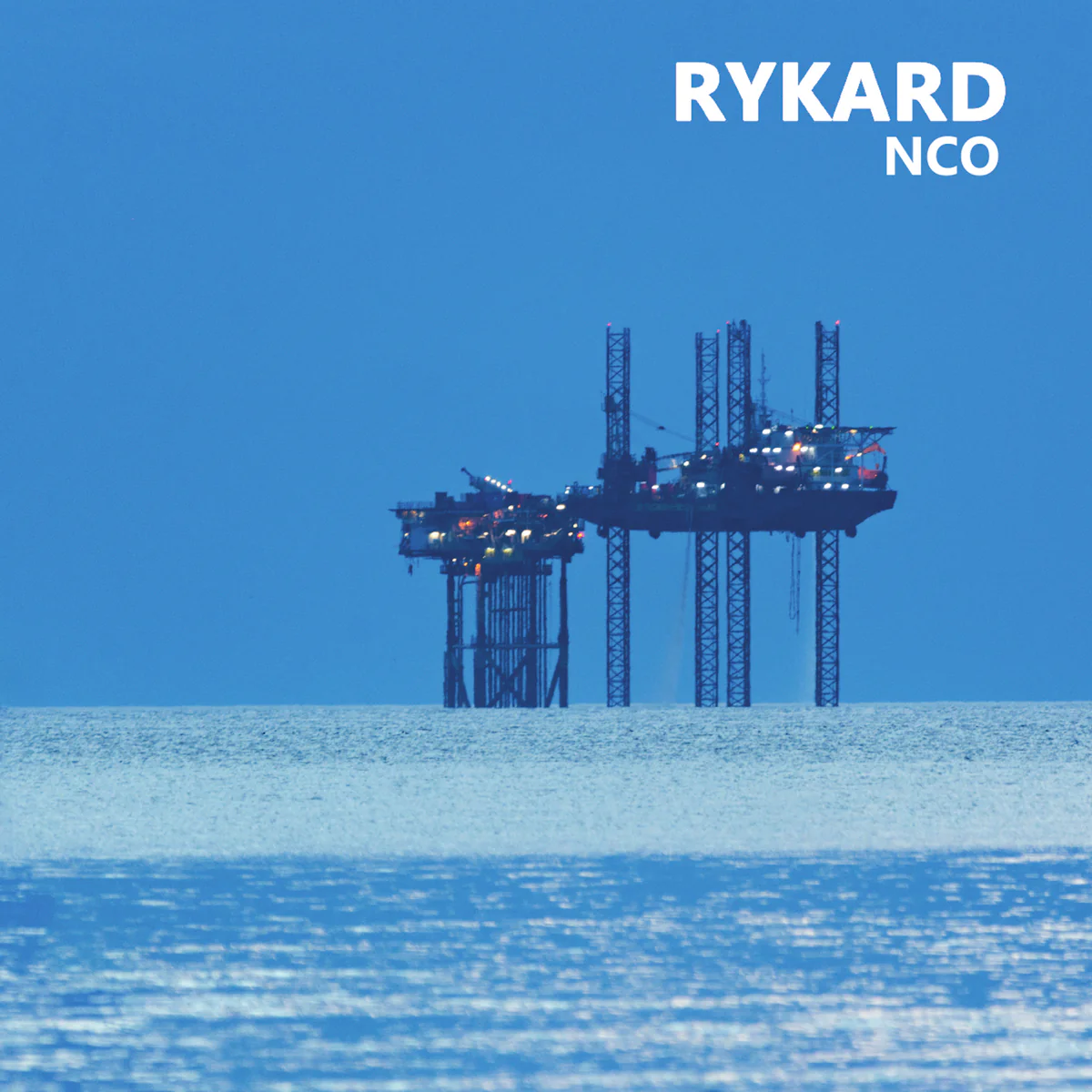
The sleeve shows a platform at dusk, lights burning, alone in open water. The name belongs to a real one.
North Cormorant stood in Block 211/21a of the UK Continental Shelf, roughly five hundred kilometres north east of Aberdeen, anchored in a hundred and sixty one metres of northern North Sea. The field was found by Shell and Esso in May 1974. The platform went in during 1981 and took its first oil on 14 February 1982.
Over the next four decades it processed six hundred and forty one million barrels, its own and imports from Causeway, Fionn, Otter and Eider, sending everything down the Brent System pipeline to Sullom Voe.
It stopped at 07:45 on Saturday 22 June 2024, after forty two years. It is now the largest platform ever brought into Lerwick Harbour to be taken apart.
- Block
- 211/21a UKCS
- Distance
- ~500 km NE of Aberdeen
- Water depth
- 161 m
- Discovered
- May 1974
- Installed
- 1981
- First oil
- 14 Feb 1982
- Produced
- 641 M barrels
- Ceased
- 22 Jun 2024, 07:45
- Status
- Decommissioning
Side B · Troup Head
Ninety metres of cliff and fifty thousand birds
The B-side is Troup Head, and it shares its name with the nearest thing to North Cormorant that people can actually reach.
Troup Head is a headland on the north east coast of Scotland, between Fraserburgh and Banff, an hour or so out of Aberdeen. Twenty nine hectares of cliff face rise to more than ninety metres. It holds Scotland’s largest mainland gannet colony, over fifty thousand seabirds each year, with kittiwakes, guillemots, razorbills and puffins packed into the same rock. Porpoises, minke whales and dolphins pass below it.
One name belongs to a structure being dismantled offshore. The other belongs to a cliff that fills with birds every April. They face the same water.
- Location
- Aberdeenshire
- Between
- Fraserburgh and Banff
- Cliff height
- 90+ m
- Reserve
- 29 hectares
- Seabirds
- 50,000+ per year
- Colony
- Largest on the mainland
- Managed by
- RSPB
The record
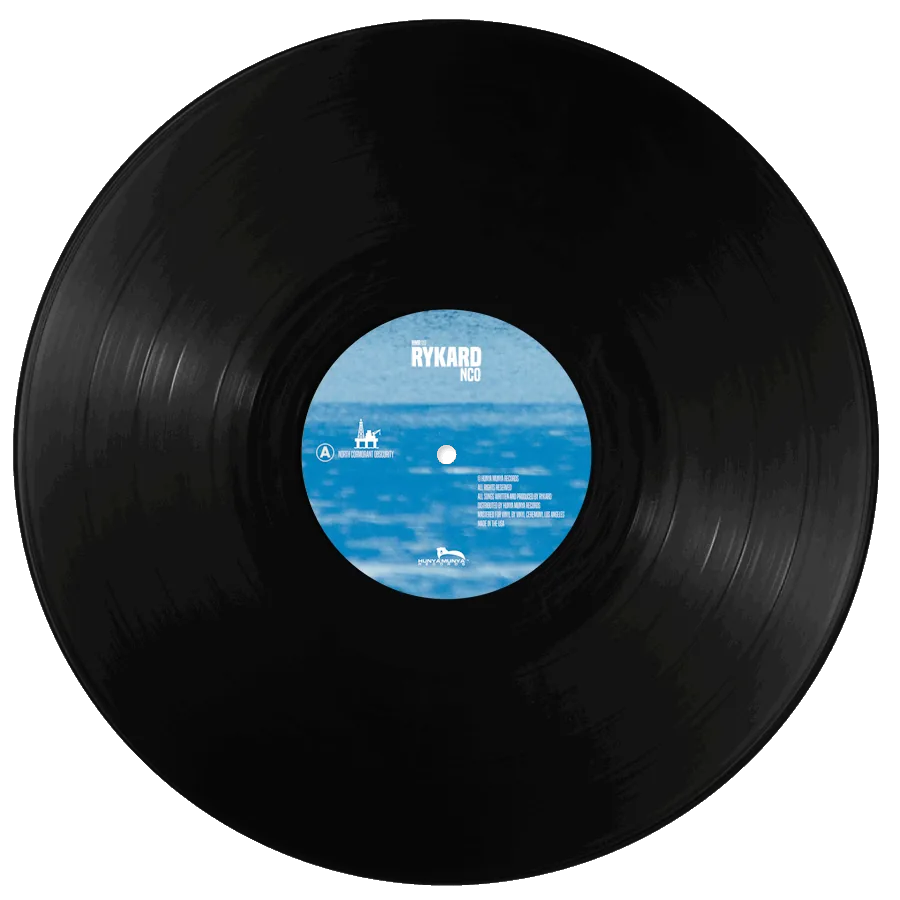
Limited 12″ vinyl, 45 RPM
$29.99
500 copies + 75 white-label promos
- Catalogue
- HMR010
- Format
- 12" / 45 RPM
- Side A
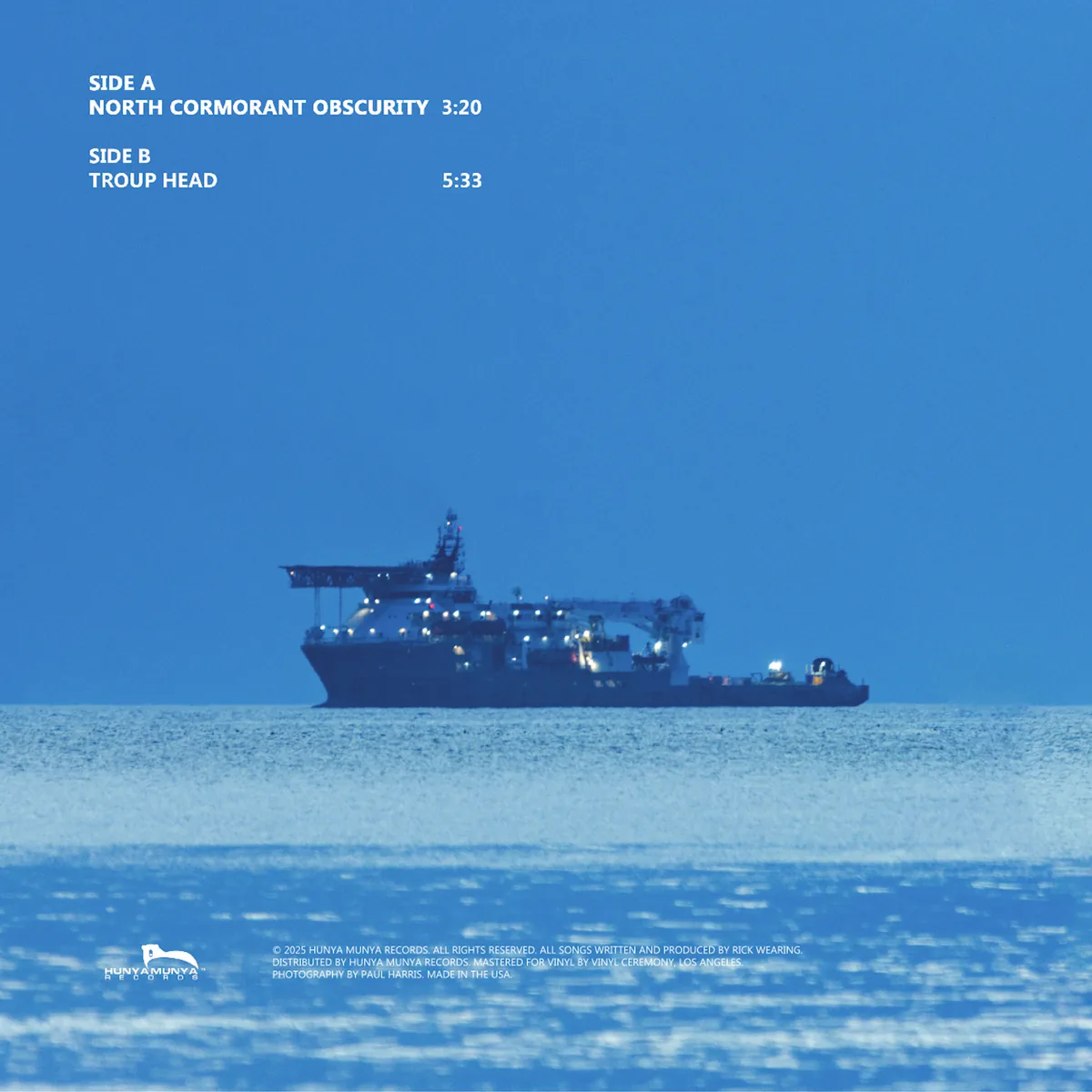
- North Cormorant Obscurity 3:20
- Side B
- Troup Head 5:33
- Sleeve
- Full-color matte, two sticker designs included with every copy
- Mastered
- Los Angeles
- Pressed by
- Vinyl Ceremony
- Released
- December 12, 2025
Listen
Hear it first
Stream this release
The artist
Rykard
Rykard is the ambient electronic project of Richard Wearing, working from the Lancashire countryside in the north of England. He has recorded for Hunya Munya Records since 2010, across the albums Arrive the Radio Beacon (2010), Luminosity (2016) and Night Towers (2018), and the four-volume Explorers series.
His records have been played on BBC 6 Music, KCRW in Los Angeles, KEXP, KALX, BBC Radio Bristol and CBC Radio 2. Listeners reach for Boards of Canada, Brian Eno and Aphex Twin when describing the work, though the north of England sits under all of it: estuary light, industrial coast, weather coming in off the water.
- Real name
- Richard Wearing
- Based
- Lancashire, England
- Label since
- 2010
- Genre
- Ambient / downtempo
- NCO streams
- 25,000,000+
Mailing list
New records, first
Hunya Munya presses in small numbers. The list is how you hear about a record before it is gone.